Opens
Draws to one or both sides along a track
Light
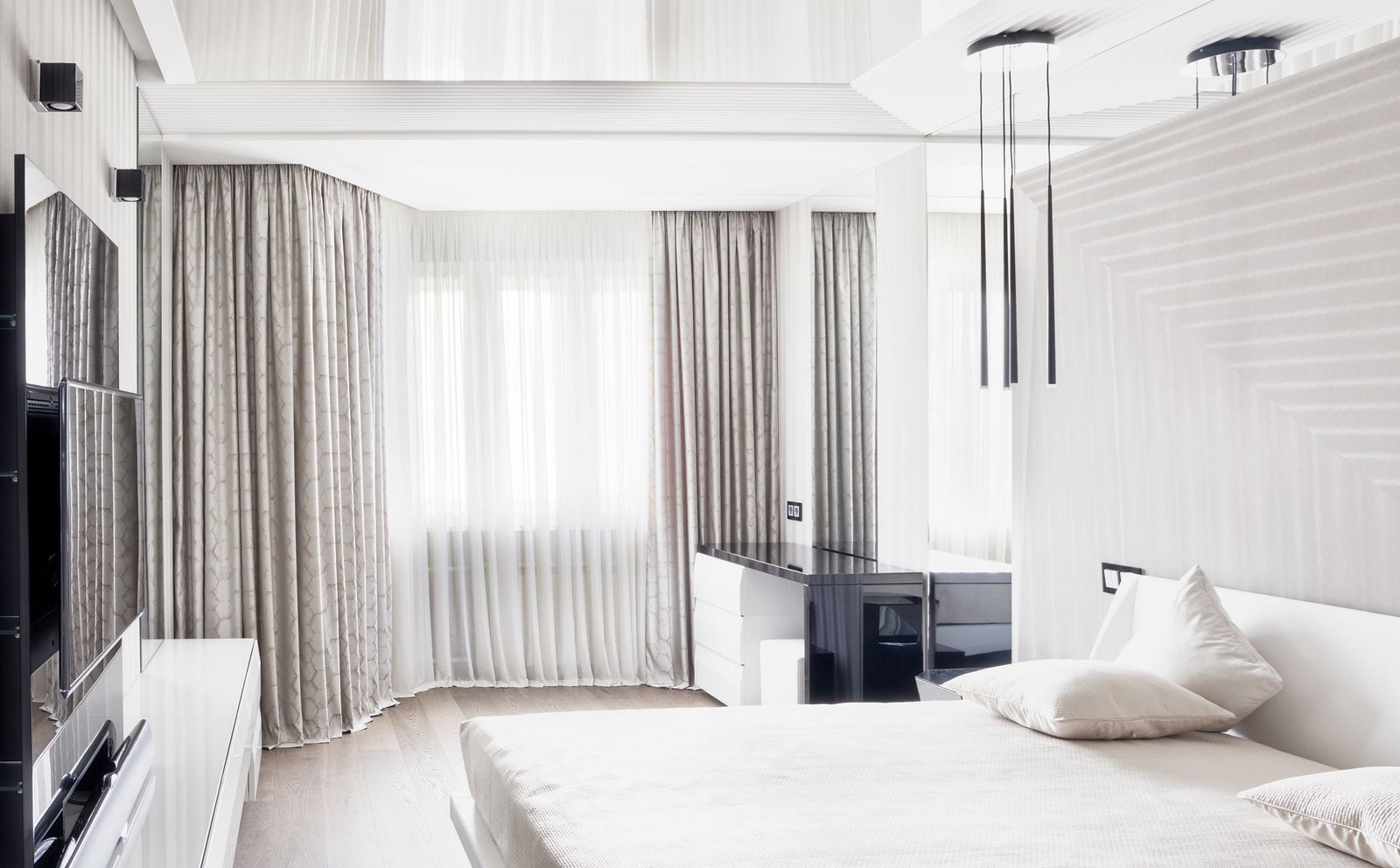
From translucent sheers to heavier, lined drapes
Suits
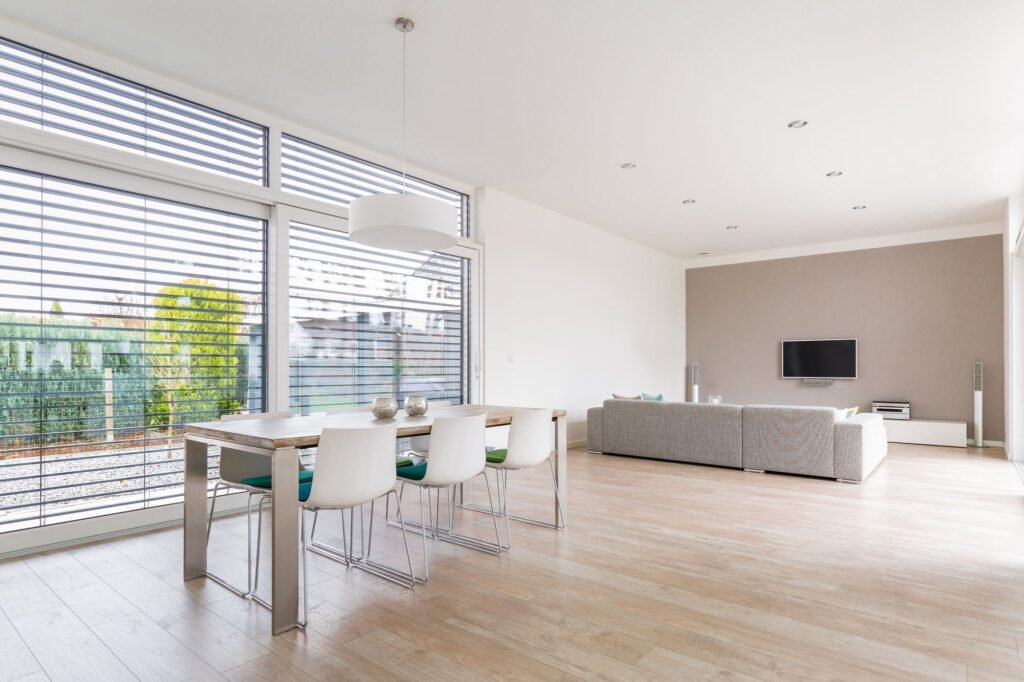
Full-height glazing, wide openings and rooms that need softness

How it works
How curtains and draperies work
Curtains hang from gliders that run along a track fixed to the ceiling or wall. The heading — the way the fabric is gathered at the top — decides how the folds fall and how much space the curtain takes up when drawn back.
Two tracks side by side let you layer a sheer with a heavier drape, so the same window can be bright and private by day and fully closed at night. Depending on the track, curtains can also follow a bay or a curve.
Why choose curtains and draperies
- Layer sheer and drape for daytime and evening
- Ceiling-fixed tracks draw the eye up and make rooms feel taller
- Covers very wide openings in one continuous run
- Fabric softens hard surfaces such as glass, stone and tile
- Works alongside a blind behind it for extra control
Where they work well
- Living and dining rooms
- Bedrooms and dressing rooms
- Majlis and reception rooms
- Hospitality interiors and full-height glazing
Gallery
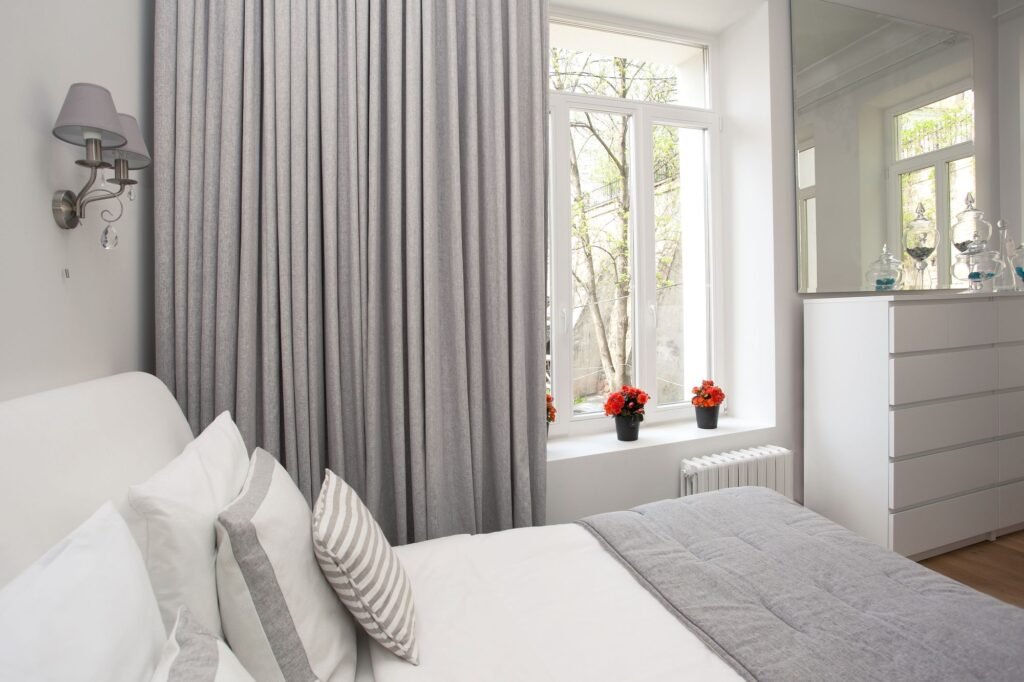
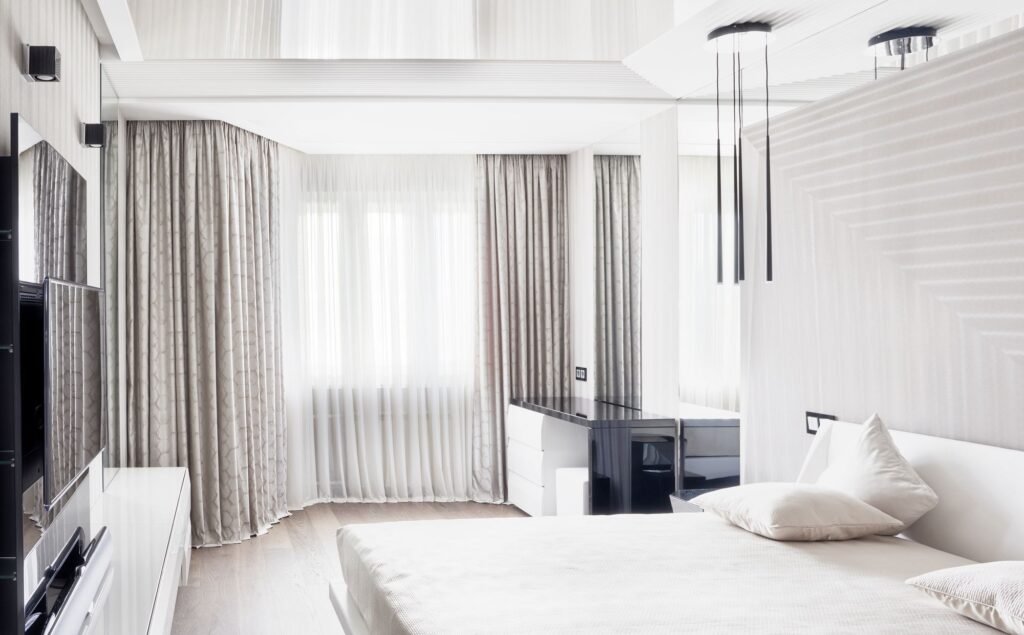
Product imagery to help you picture curtains and draperies in different rooms. Select an image to enlarge it.


What is the difference between a sheer and a drape?
A sheer is a light, translucent fabric that filters daylight and softens a view while letting you see out. A drape is heavier and more opaque, used for privacy and to close a room off in the evening. Many rooms use both on a double track.
Should curtains be fixed to the ceiling or the wall?
Ceiling fixing suits full-height glazing and gives a clean, tall line. Wall fixing above the window works where there is no suitable ceiling. Either way, extending the track beyond the window lets curtains stack clear of the glass.
Will blackout curtains make a room completely dark?
Blackout fabric blocks light through the material, but light can still enter at the top, sides and bottom. Ceiling fixing, generous overlap and the right track all help. Let us know if a dark room is a priority.
Can I combine curtains with blinds?
Yes. A roller or Roman blind behind a sheer curtain is a common pairing: the blind handles glare and privacy, while the curtain adds softness and frames the window.